Research & Mill Facilities That Feed Spec Sheets
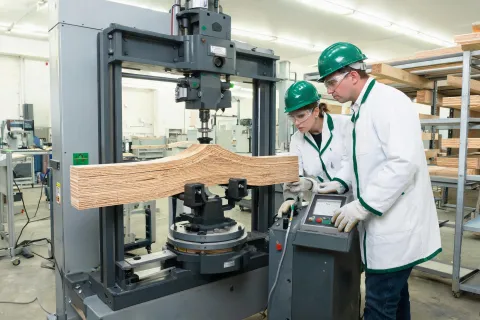
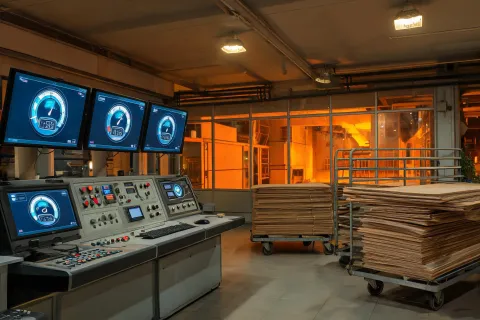
Laboratories and production lines share the same measurement culture—moisture meters, bending fixtures, and adhesive cure logs—so catalog numbers match what arrives on the truck.
We operate as a materials science company that happens to ship wood. Design values, mill analytics, and chain-of-custody audits sit at the center of how Boise Cascade serves structural markets.
“Publish the number, prove the assembly, then ship the member.” That operating sentence guides how Boise Cascade writes span tables, trains field teams, and invests in resin and drying science so architects and engineers can defend specs with evidence—not slogans.
Mission focus: reduce structural uncertainty on residential, multifamily, modular, and light commercial projects by pairing mill-traceable fiber with APA EWS verified design values.
Laboratories and production lines share the same measurement culture—moisture meters, bending fixtures, and adhesive cure logs—so catalog numbers match what arrives on the truck.
These resources help specification writers and building inspectors evaluate Boise Cascade systems without waiting for a sales visit. Request the latest revision through our project desk.
Live-load tables, cantilever limits, and web-hole rules for common residential depths.
Compressive strength pathways, bearing length charts, and multi-ply fastening schedules.
ICC-ES ESR references for rated floor packages including rim and penetration details.
Jobsite wrap, sticker spacing, and moisture vapor transmission checkpoints before close-in.
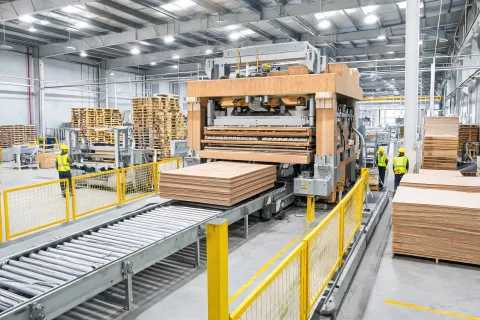
Founded in 1957, Boise Cascade grew from regional lumber distribution into a vertically coordinated engineered wood manufacturer with 37 plants and coverage across 30 states. The company employs roughly 5,000–7,000 people across mill, technical, and logistics roles. Growth has tracked the industry shift from commodity boards toward documented structural systems—especially as multifamily and modular builders demanded tighter tolerances than random-length lumber could consistently deliver.
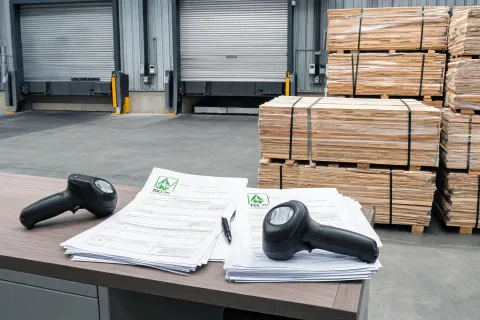
We do not claim every project needs certified lots or hybrid detailing. We do claim that when those requirements appear, our mills can respond with measurable data: APA EWS marks, chain-of-custody certificates, and assembly notes that survive plan review. Limits are equally explicit: outdoor exposure windows still require wrap discipline; adhesive cure slows below published mill temperatures; and long-span creep must be checked against the governing load duration—not assumed away by brand reputation.
Whether you need a capability briefing or a live span clinic, our team will match the right plant and publication set to your project.